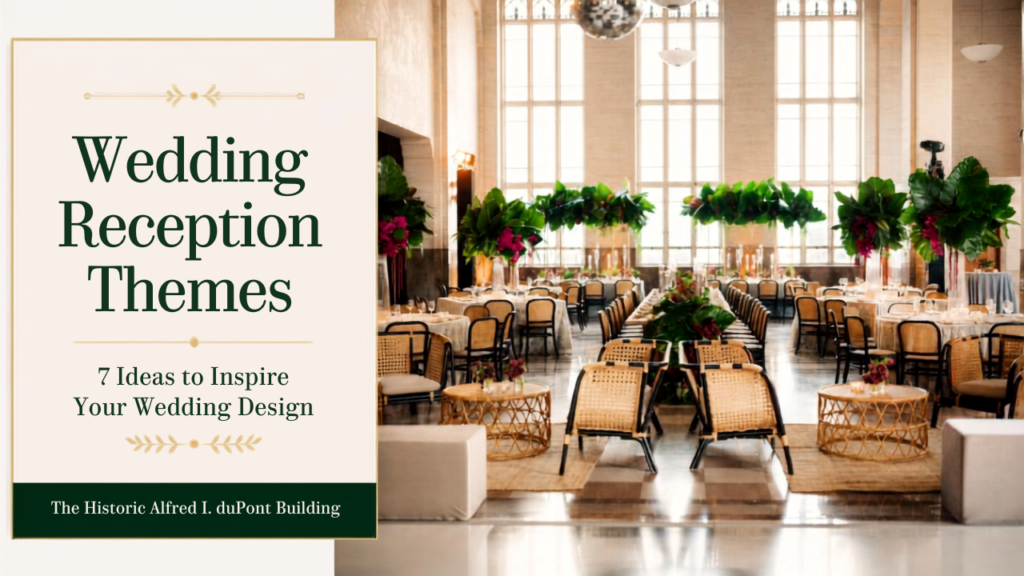
Choosing between different wedding reception themes can make every other design decision feel easier. From florals and lighting to tablescapes and color palettes, a clear reception style helps create a celebration that feels cohesive and personal.
A wedding reception theme does not have to mean matching every detail or committing to something overly literal. In many cases, it simply gives the celebration a clear visual direction. Flowers, linens, lighting, stationery, tablescapes and entertainment can all feel connected without looking identical.
Some couples imagine an indoor garden overflowing with greenery and candlelight. Others picture black-tie formality, Art Deco details, richer color palettes or a reception that becomes a high-energy party later in the evening.
The venue matters just as much as the décor.
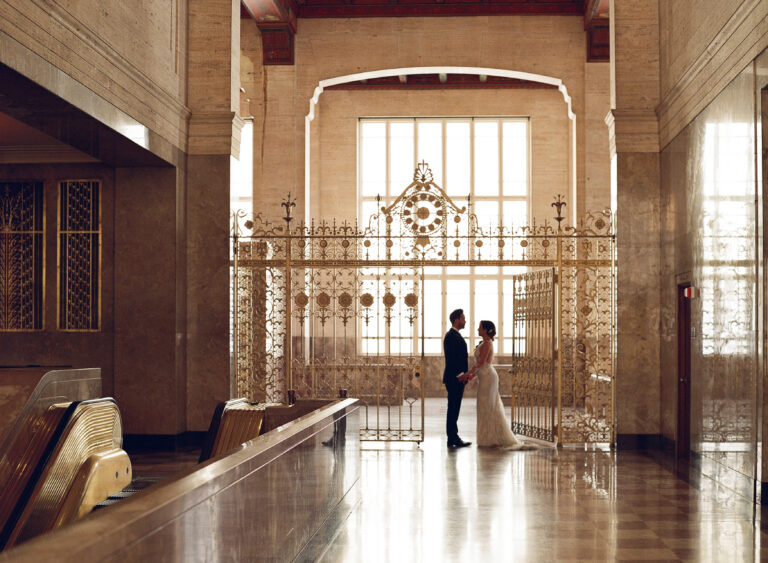
At The Historic Alfred I. duPont Building, original stonework, marble, decorative ironwork and a soaring hand-painted ceiling already create visual interest. That gives couples the opportunity to design around the architecture instead of having to create an atmosphere from scratch.
If you are narrowing down your wedding style, these eight wedding reception themes can help you start shaping the look and feeling of your celebration.
1. Wedding Reception Themes: Garden-Inspired Wedding Reception
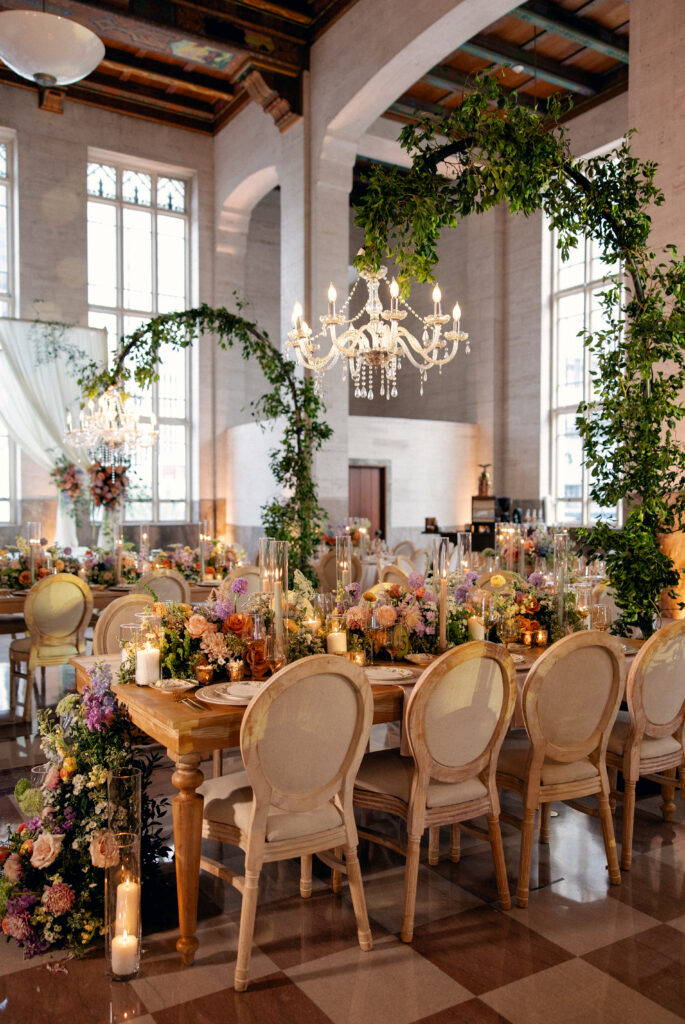
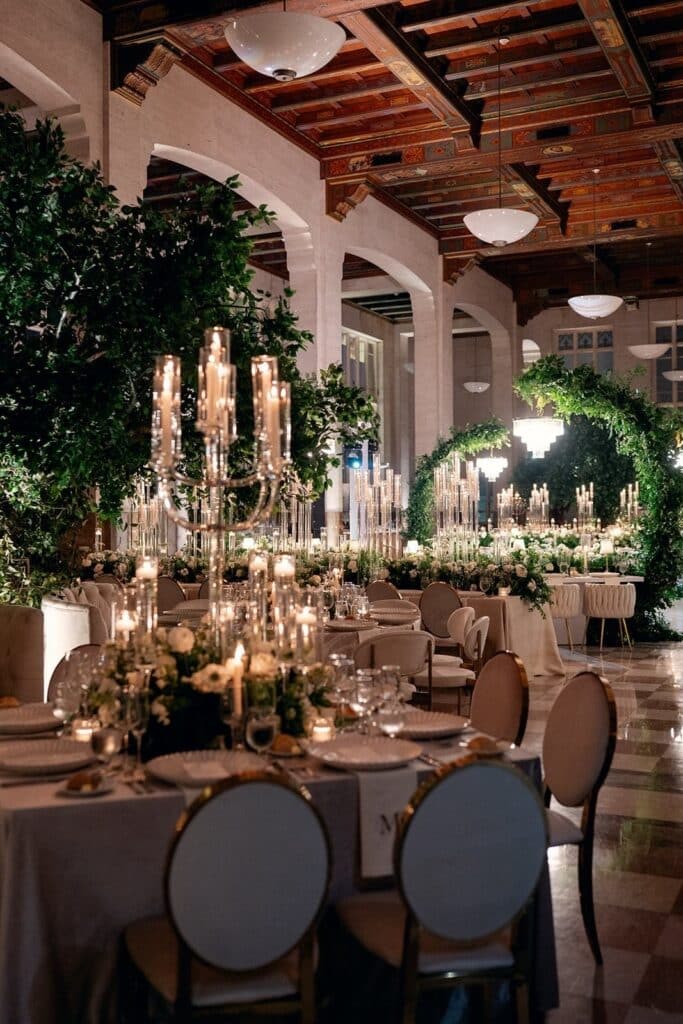
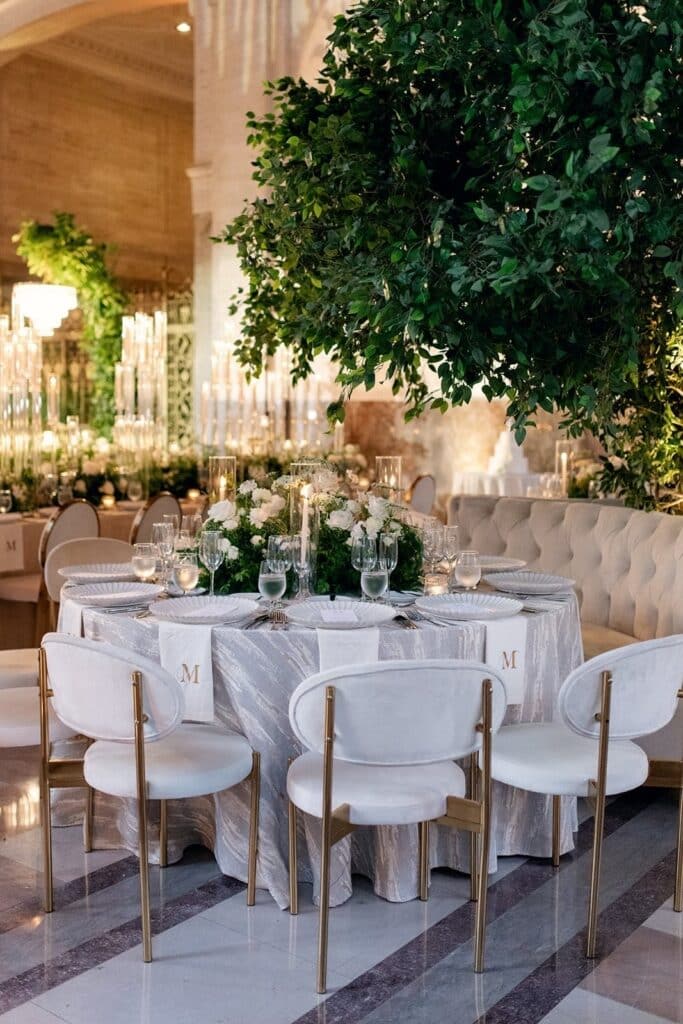
Picture layers of greenery, natural textures, flowers at different heights and plenty of candlelight.
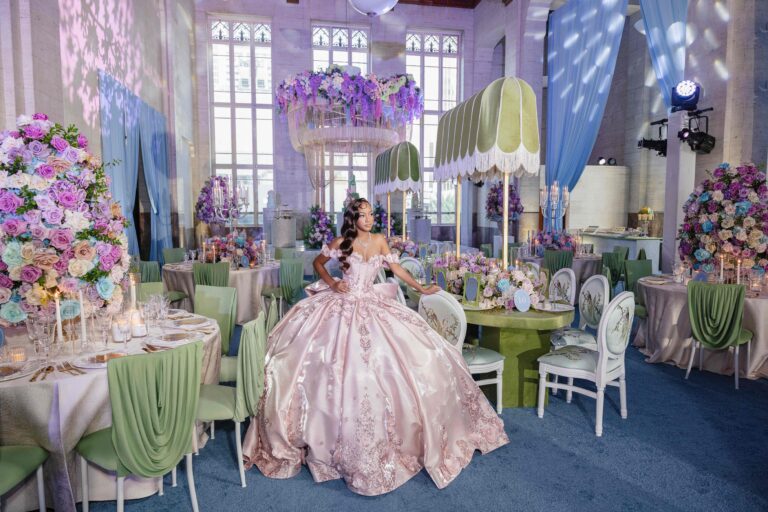
A garden-inspired reception does not need to be outdoors. Bringing greenery and floral design inside can soften a ballroom and create the feeling of a romantic garden while keeping all the benefits of an indoor celebration.
Large greenery installations, floral arches, indoor trees, cascading arrangements and mixed-height centerpieces can all help create that effect. Instead of repeating one centerpiece across every table, combining tall arrangements with lower florals makes the room feel more layered and organic.
This approach has worked especially well in previous duPont weddings. Andrea and Kyle’s celebration combined colorful garden-style flowers, greenery, chandeliers and candles, while Michelle and Phillip used towering indoor trees, white flowers and glowing candelabras to transform the room. (thedupontbuilding.com)
A good way to carry the theme through the full event is to extend the flowers beyond the tables. Staircases, escort-card displays, ceremony entrances and bars can all become part of the garden-inspired design.
2. Wedding Reception Themes: Art Deco Wedding Reception


For an Art Deco wedding reception, think geometric details, metallic finishes, black accents, vintage-inspired styling and dramatic light.
Black and gold may be the first color combination people associate with Art Deco, but the look can also work beautifully with champagne, ivory, emerald, burgundy, navy or blush.
Rather than turning every detail into a literal theme element, use the style in smaller, repeated ways. Geometric stationery, metallic table numbers, patterned linens, vintage glassware, structured florals and statement lighting can establish the aesthetic without overwhelming the room.
This is also where the venue itself can do some of the design work. The duPont Building’s marble, decorative ironwork and 1930s architecture naturally support an Art Deco-inspired celebration.
The strongest approach is usually to choose two or three Deco-inspired details and repeat them throughout the reception rather than recreating the era through props.
3. Wedding Reception Themes: Black-Tie Wedding Reception
A black-tie reception is more about the overall sense of occasion than a single décor formula.
White florals, clear glassware, candlelight, black details and gold accents can all support the look. Tall arrangements or candles can add height, while lower florals keep tables open for conversation.
Lighting becomes especially important as dinner gives way to dancing.
One black-tie wedding at the duPont Building paired soft white florals with candlelight for a formal ceremony and reception, then transitioned into a much livelier dance-floor atmosphere later in the evening.
When planning this type of reception, think about the whole evening rather than just the dinner setup. The room can feel polished and formal at the start, then completely change once the lighting, music and entertainment shift.
4. Wedding Reception Themes: Romantic Candlelit Wedding Reception
If you want the reception to feel warm and intimate, candlelight can become one of the main design elements.
Taper candles bring height. Glass hurricanes create soft glow. Small votives fill in the spaces between flowers and place settings.
The effect becomes even stronger when candlelight extends beyond the tables.
A staircase, escort-card display, cake area or ceremony aisle can all become part of the lighting design. Several duPont weddings we have worked with in previous content have used the same successful combination of greenery, white flowers and warm candlelight, which is also why those weddings have given us so much strong Pinterest material.
One planning detail worth thinking about early is how the room will photograph after sunset. Your reception design should still look intentional later in the evening, not only when guests first arrive.
5. Wedding Reception Themes: Moody Black, Gold & Chocolate Wedding
For couples who want a deeper, richer palette, black, chocolate and gold can create a dramatic reception without making the room feel too heavy. The duPont Building already carries the character of another era, which makes this style a natural fit. It was also the setting for Danielle Brooks’ wedding, which was featured by publications including Vogue and Vanity Fair.
Black adds contrast. Chocolate and espresso introduce warmth. Gold reflects candlelight. Ivory and greenery keep the palette from becoming too dark.
Burgundy, plum or deep red can also work well if you want to bring in more color.
The duPont Building recently featured this palette in a dedicated inspiration article because darker tones sit especially well against marble, historic metalwork and warm architectural details.
The key is balance. Darker linens and accents are much stronger when paired with lighter flowers, clear or matching glassware, greenery or softer neutrals.
6. Wedding Reception Themes: White & Green Wedding Reception
White and green remains one of the most versatile directions for wedding décor.
It works in every season, photographs beautifully and can feel completely different depending on the styling around it.
Low garden-style arrangements and delicate candles create a softer look. Large greenery installations and tall centerpieces bring more drama. Structured white florals with minimal greenery can make the same palette feel much more modern.
One previous duPont wedding featuring gold, green and white décor layered white florals, greenery, candlelight and metallic accents throughout the reception. (thedupontbuilding.com)
Because the colors stay simple, texture becomes especially important. Flowers, foliage, glassware, linens and lighting can all add depth without introducing another color.
7. Wedding Reception Themes: Bold Modern Wedding Reception
A modern reception gives couples more freedom to mix unexpected elements.
Oversized greenery can sit beside mirrored disco balls. Dramatic florals can be paired with contemporary lounge furniture. A formal dinner can transition into immersive lighting and entertainment later in the evening.
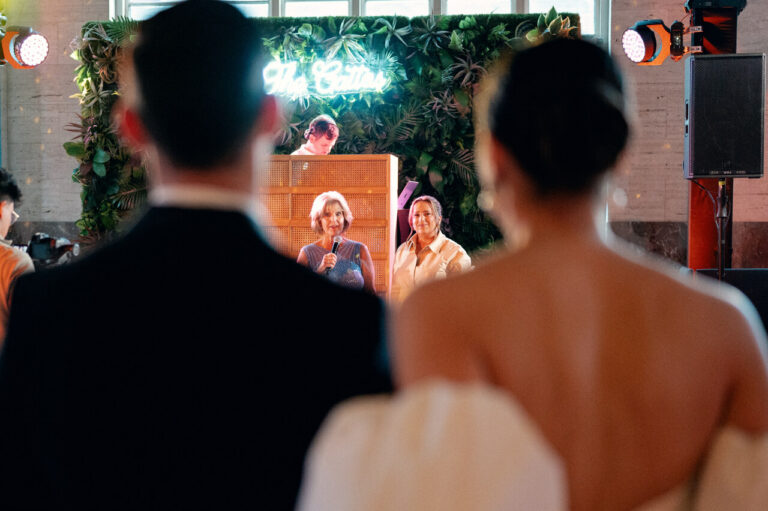
The Gattos wedding at the duPont Building is a good example of that contrast. Lush greenery, candlelight, sculptural florals and suspended disco balls created one atmosphere during dinner and another once the celebration moved into party mode. (thedupontbuilding.com)
The strongest modern receptions usually have one or two unforgettable focal points rather than ten competing ideas.
That could be a ceiling installation, sculptural floral design, statement bar, unconventional dance floor, custom lighting or lounge area.
How to Choose Between Wedding Reception Themes
The best theme is not automatically the one that happens to be trending.
Start with the feeling you want guests to have.
Maybe you want the room to feel intimate and romantic. Maybe you picture a formal black-tie dinner. Maybe you want greenery everywhere. Or maybe the reception needs to begin polished and end as a full-scale party.
Then look closely at the venue itself.
Notice the architecture, ceiling, flooring, natural light and existing color palette. Decide which details you want to highlight rather than cover.
From there, choose a few elements that can repeat throughout the event. Your color palette, floral style, lighting and tablescape details can do most of the work.
A theme should help guide decisions. It does not need to make every part of the wedding look exactly the same.
Let the Venue Become Part of the Wedding Design
A venue with existing character changes the way couples can approach décor.
The Historic Alfred I. duPont Building was built in 1939 and today gives couples creative control over their event design, including the ability to choose the vendors and details that best reflect their vision.
Garden-style flowers can soften the architecture.
Black and gold can emphasize it.
Candlelight can make the room feel completely different at night.
Modern installations can create contrast against historic details.
There is not one specific reception theme that belongs in the space, and that flexibility is part of what makes the design possibilities interesting.
Ready to Start Planning Your Wedding?
If you’re searching for a wedding venue where your vision can take the lead, explore The Historic Alfred I. duPont Building and imagine how your own reception could transform the space.
What are some popular wedding reception themes?
Wedding reception themes can range from garden-inspired and candlelit celebrations to black-tie, Art Deco, modern, romantic, vintage and bold color-driven designs. The best theme is one that reflects the couple’s personal style and works naturally with the venue.
How do I choose a theme for my wedding reception?
Start with the atmosphere you want to create, then consider your venue, season, preferred colors and overall level of formality. Use those choices to guide your flowers, tablescapes, lighting, stationery and other décor.
Does my wedding need a specific theme?
No. A wedding theme can simply be a consistent design direction. A color palette, floral style and approach to lighting may be enough to make the reception feel cohesive without choosing a literal theme.
How can I make an indoor wedding reception feel unique?
Lighting, greenery, florals, ceiling installations, lounge seating, personalized stationery and creative tablescapes can dramatically change an indoor space. Choosing a venue with architectural character also gives the design another layer to work with.