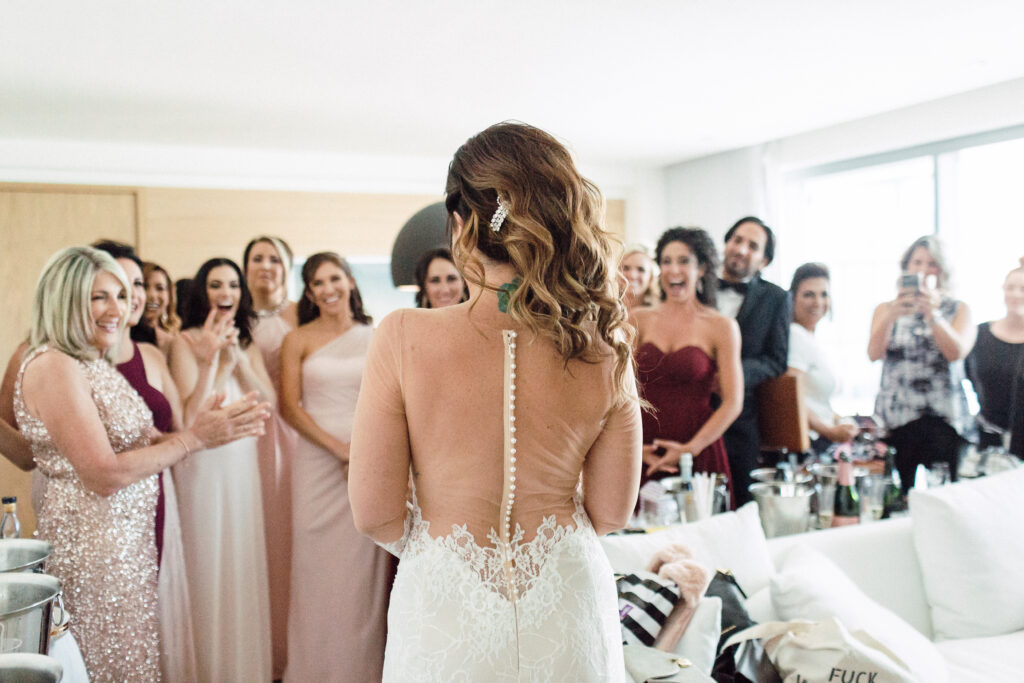
Some wedding dresses are designed to make an entrance. Others make just as much of an impression when the bride walks away.
Backless and open-back wedding dresses are putting more attention on the full bridal look, from intricate buttons and lace to sculptural silhouettes, veils and statement accessories. And when it comes to backless wedding dress photos, the right venue can make those details even more memorable.
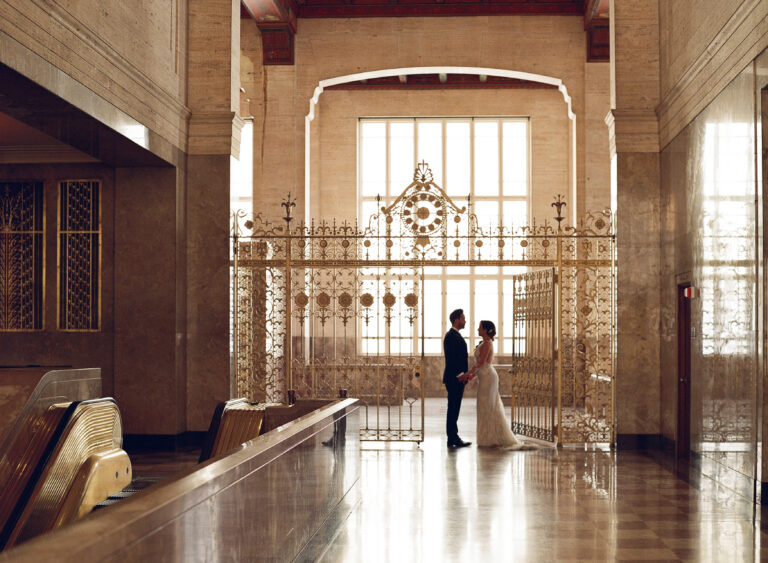
For couples planning a wedding in Miami, architecture, lighting and movement can all become part of the photograph. At The Historic Alfred I. duPont Building, original 1930s architecture provides a distinctive backdrop for everything from quiet bridal portraits to editorial couple photographs and dramatic reception moments.
Here are some of our favorite ways to photograph a backless wedding dress—and why the setting matters just as much as the gown.
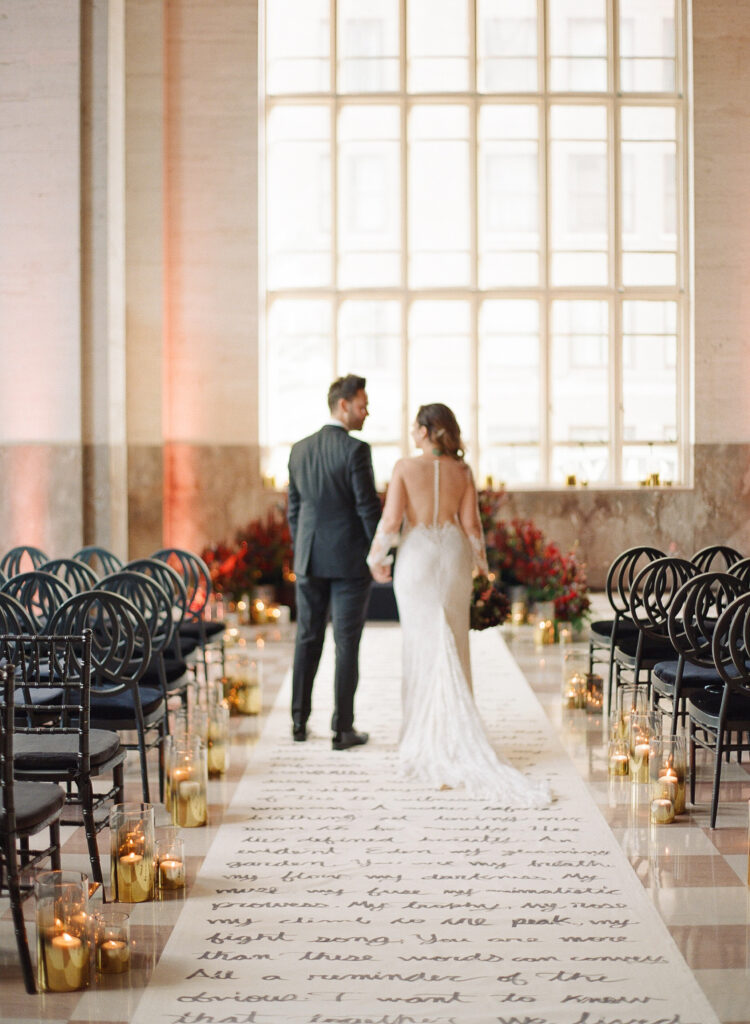
1. Start With the Classic Walk-Away Portrait
Sometimes the simplest photograph is the strongest.
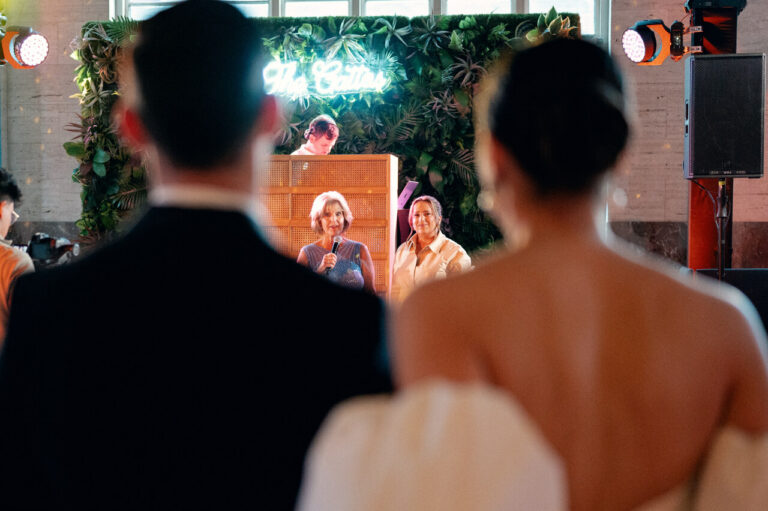
Have the bride walk away from the camera rather than holding a traditional pose.
This naturally highlights:
- The back of the gown
- The train
- Buttons or lace detailing
- The bride’s hairstyle
- The shape and movement of the dress
A long hallway, ceremony aisle or architectural corridor can add leading lines that draw attention directly toward the bride.
The result feels less posed and more editorial.
For couples looking for backless wedding dress photos, this is one image worth specifically requesting from the photographer.
2. Use Architecture to Frame the Dress
A beautiful wedding gown deserves a setting that contributes to the photograph without competing with it.
Large windows, marble details, dramatic doorways, staircases and architectural lines can naturally frame the bride.
Historic venues are particularly well suited for this style of portrait because they provide visual depth before any additional décor is introduced.
The Historic Alfred I. duPont Building was completed in 1939 and still features many of its original architectural elements today.
That creates an interesting contrast between historic architecture and contemporary bridal fashion.
A modern open-back gown against a space with decades of character can feel timeless rather than overly trendy.
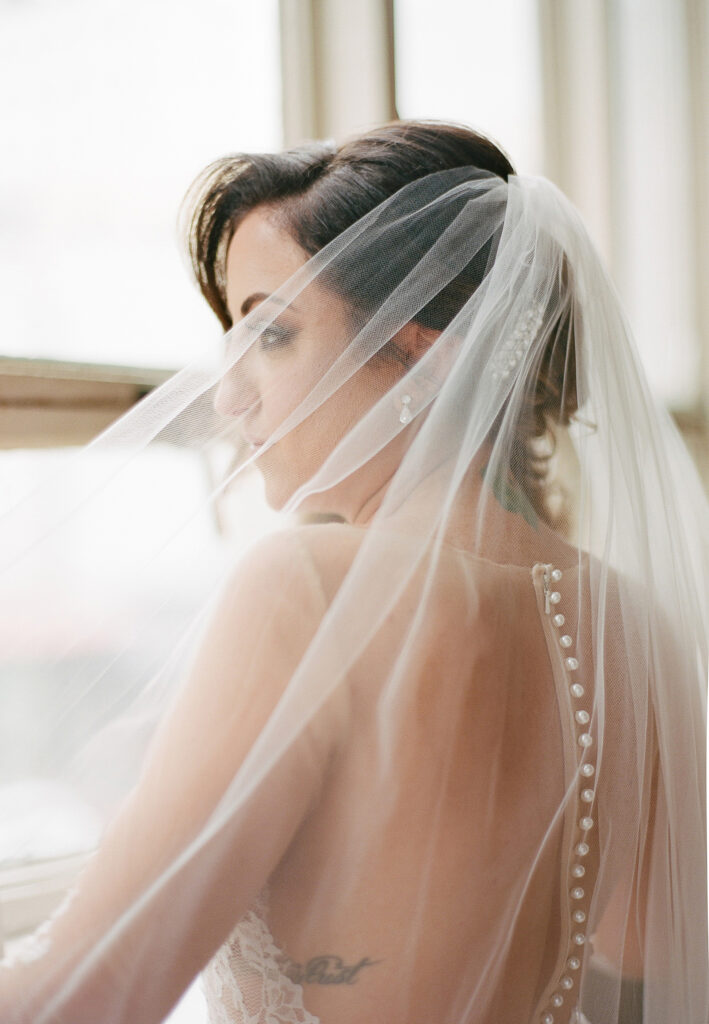
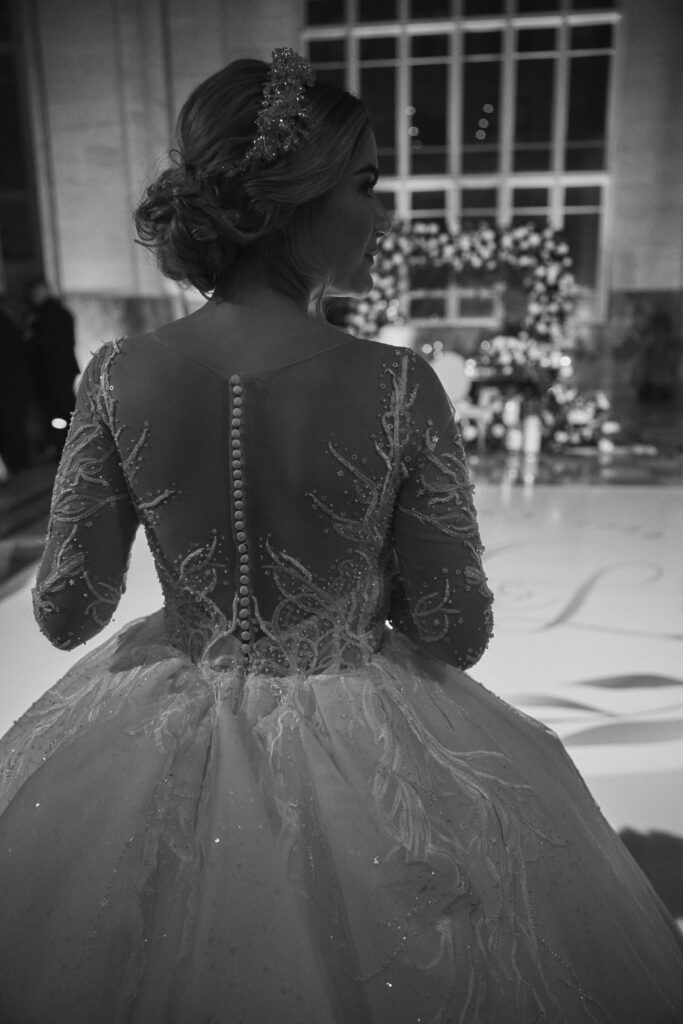
3. Capture the Over-the-Shoulder Portrait
An over-the-shoulder portrait gives photographers the best of both worlds.
The back of the gown remains the focus while the bride’s face is still visible.
This pose works particularly well for dresses featuring:
- Low backs
- Pearl or button detailing
- Lace
- Illusion fabric
- Bows
- Draping
- Statement straps
It is also a great opportunity to photograph jewelry, hair accessories and bridal hairstyles.
Instead of looking directly at the camera, the bride can glance toward a window, look back toward the photographer or interact with her veil.
Small changes can create several completely different photographs within only a few minutes.
4. Photograph the First Look From Behind
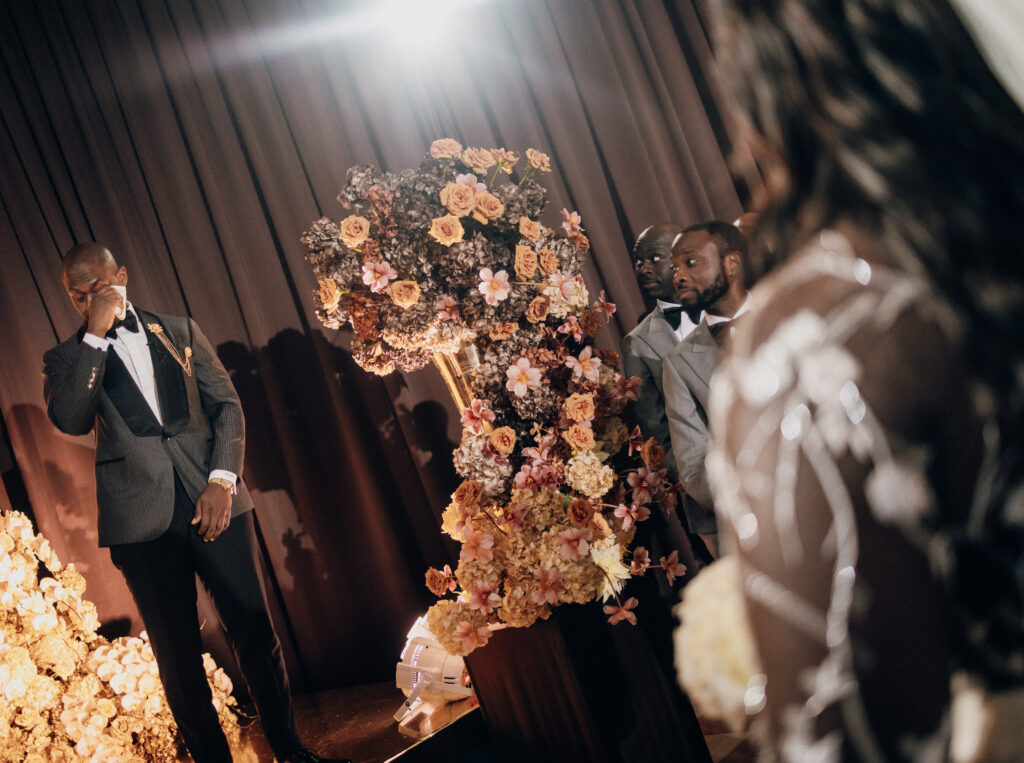
The first look is usually associated with the groom’s reaction.
But the moments immediately before the reveal can also create some of the most beautiful backless wedding dress photos from the day.
Have the photographer position themselves behind the bride as she approaches.
This angle captures:
- The dress in motion
- The train
- The anticipation of the first look
- The groom waiting ahead
- The architecture surrounding the couple
Then, once the groom turns around, the photograph becomes part of a larger story.
It is a perfect example of why wedding photography does not always need to begin with a traditional pose.
5. Take Some Portraits Without the Veil
A long veil can be incredible in photographs.
But it can also cover the exact detail that made a bride fall in love with her dress.
Build a few minutes into the wedding timeline for bridal portraits both with and without the veil.
Before removing it, photograph the movement and softness it creates.
Afterward, capture the full back of the gown.
This gives the final wedding gallery two completely different bridal looks without requiring an outfit change.
For dresses with detailed backs, pearls, buttons or intricate lace, those veil-free photographs can become some of the most important fashion images from the day.
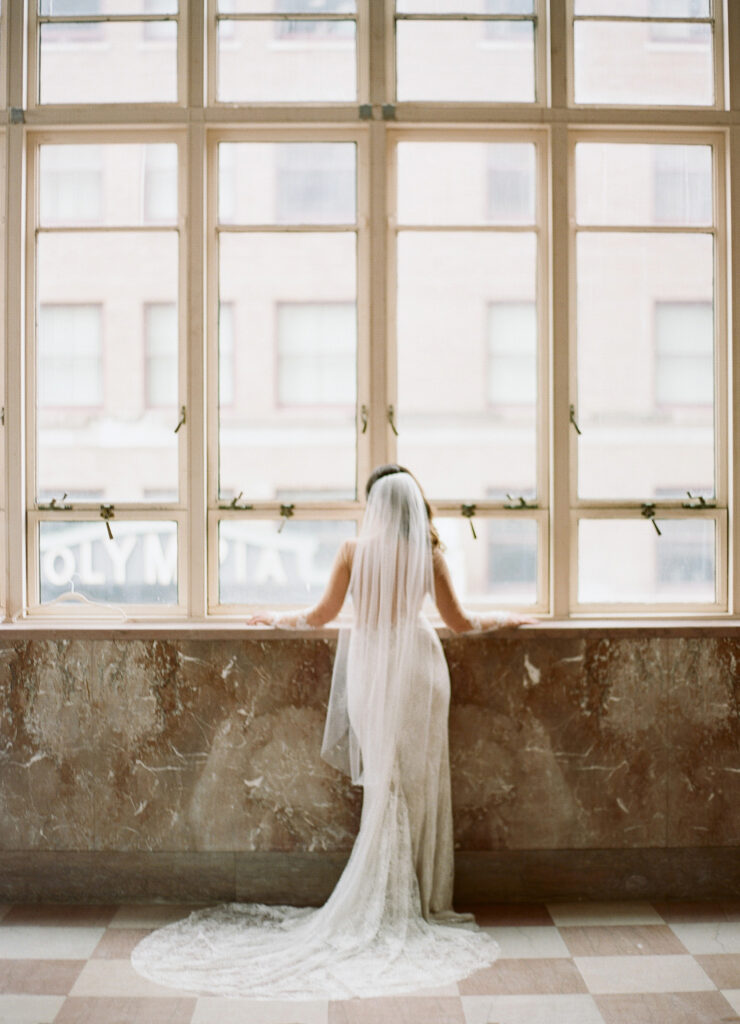

Pairing it with a second image showing her uncovered back would make this section especially strong.
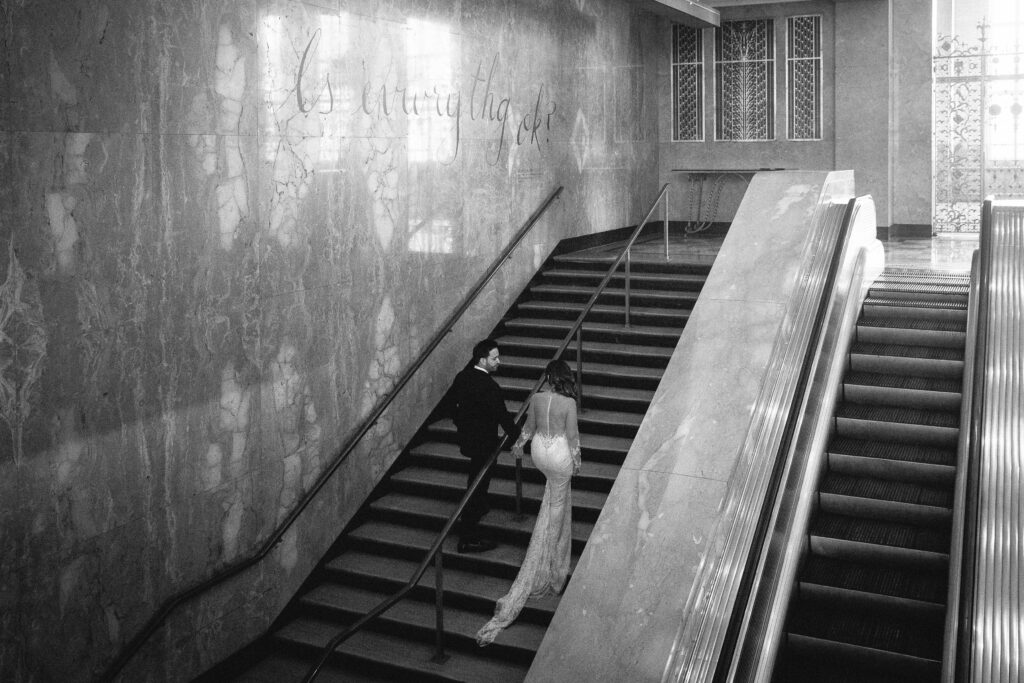
6. Let the Staircase Create Movement
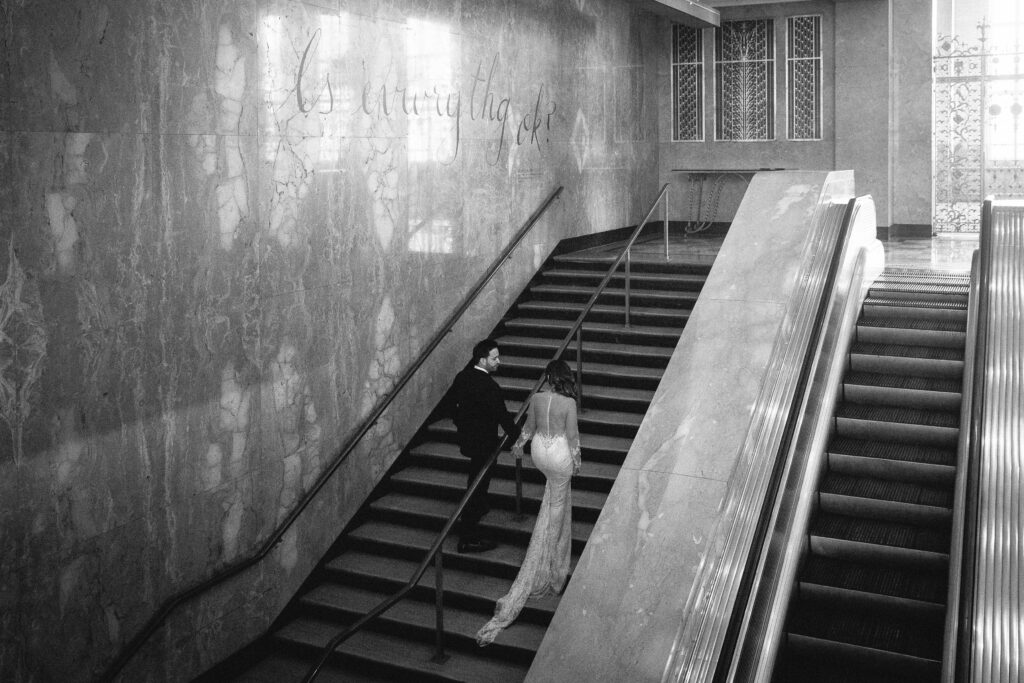
Staircases naturally create beautiful composition.
Rather than standing still halfway up the stairs, allow the bride to move.
Photograph her walking upward from behind to highlight the back of the gown and train.
Then reverse the angle.
Photographing movement generally creates a softer, more natural image than asking the bride to hold a complicated pose.
Historic staircases and architectural spaces also give photographers the opportunity to create portraits that feel different from traditional ballroom wedding photographs.
7. Plan an Editorial Bridal Portrait
Not every wedding portrait needs to show the entire dress.
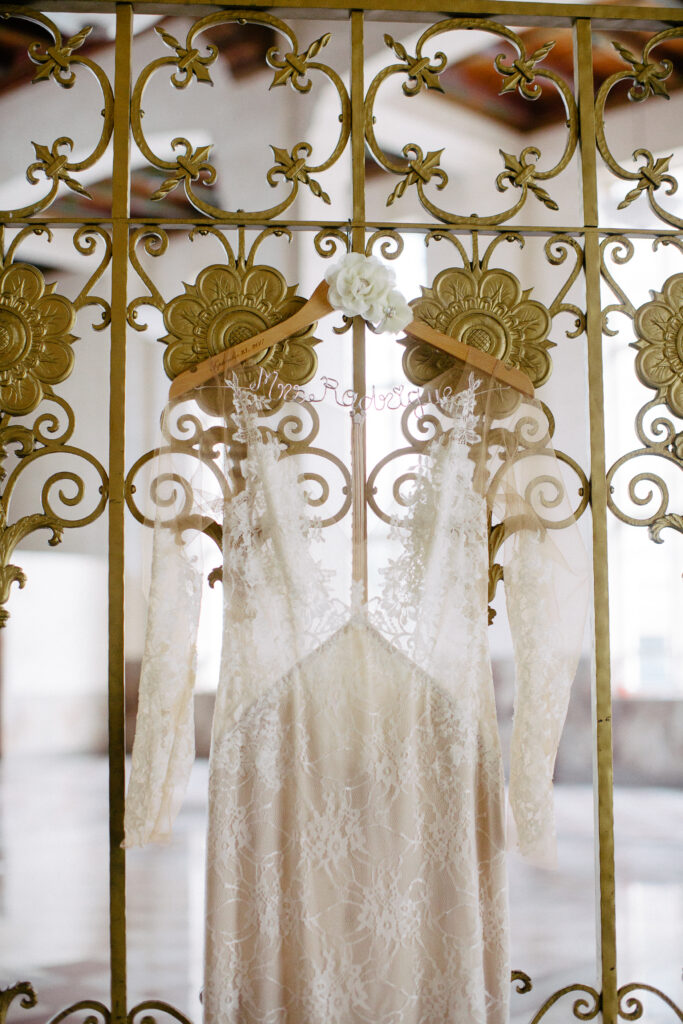
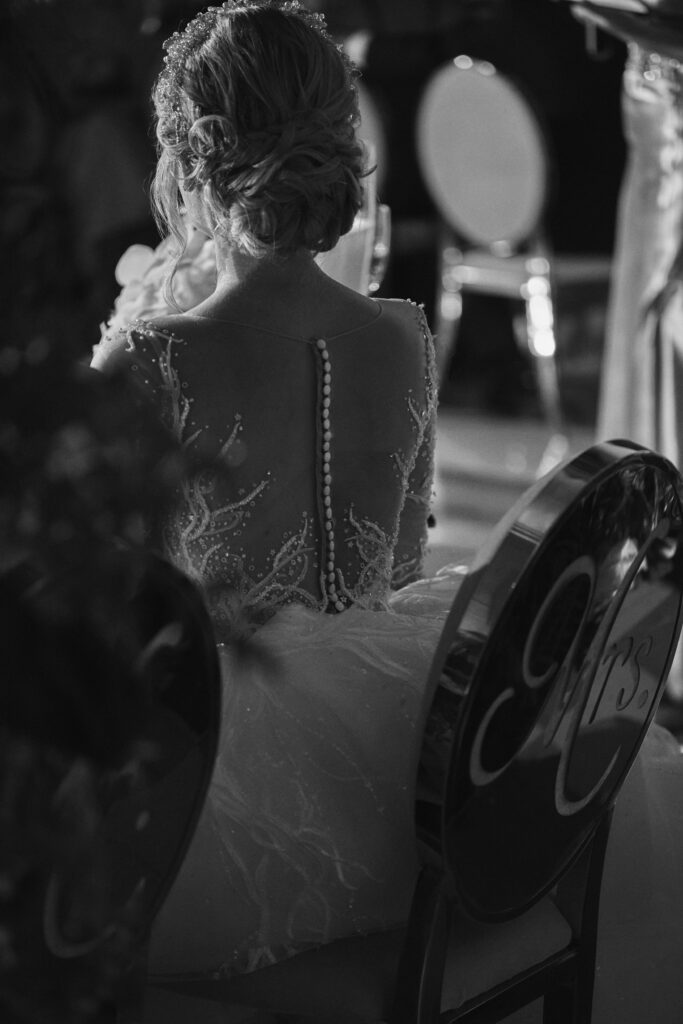
Some of the strongest bridal images focus closely on one detail.
The curve of an open back.
A row of pearl buttons.
Lace against the skin.
The edge of a veil.
An earring or hair accessory.
A tightly composed portrait can make those elements feel almost like a fashion editorial.
This is especially effective when the wedding venue has clean lines, stone, marble or other architectural textures that give the photographer a subtle background.
8. Use the Ceremony Aisle for Another Back-of-the-Dress Moment
The ceremony creates one of the most naturally emotional opportunities to photograph a backless wedding gown.
When the bride walks down the aisle, guests see exactly what the photographer sees from behind.
The full gown.
The veil.
The train.
The ceremony design.
And the groom waiting ahead.
After the ceremony, the same aisle can create an entirely different photograph.
Have the couple walk back through the empty ceremony space together before the room is transformed.
It gives the photographer an opportunity to capture both the couple and the complete ceremony design without guests blocking the architectural details.
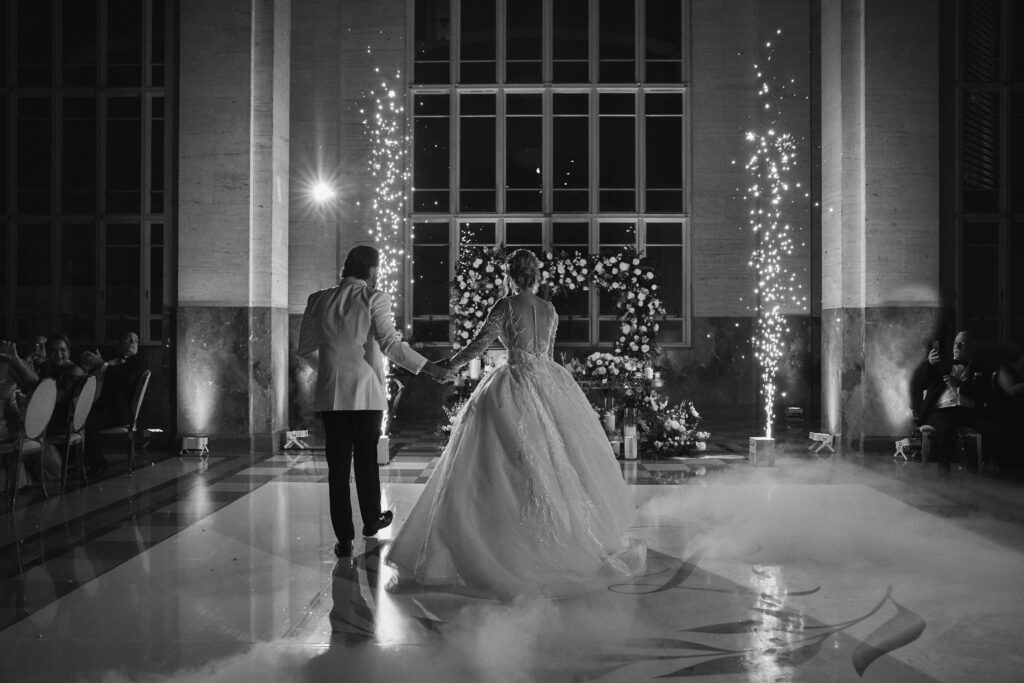
9. Don’t Forget the Reception Entrance
Once the ceremony is over, the bridal fashion story does not end.
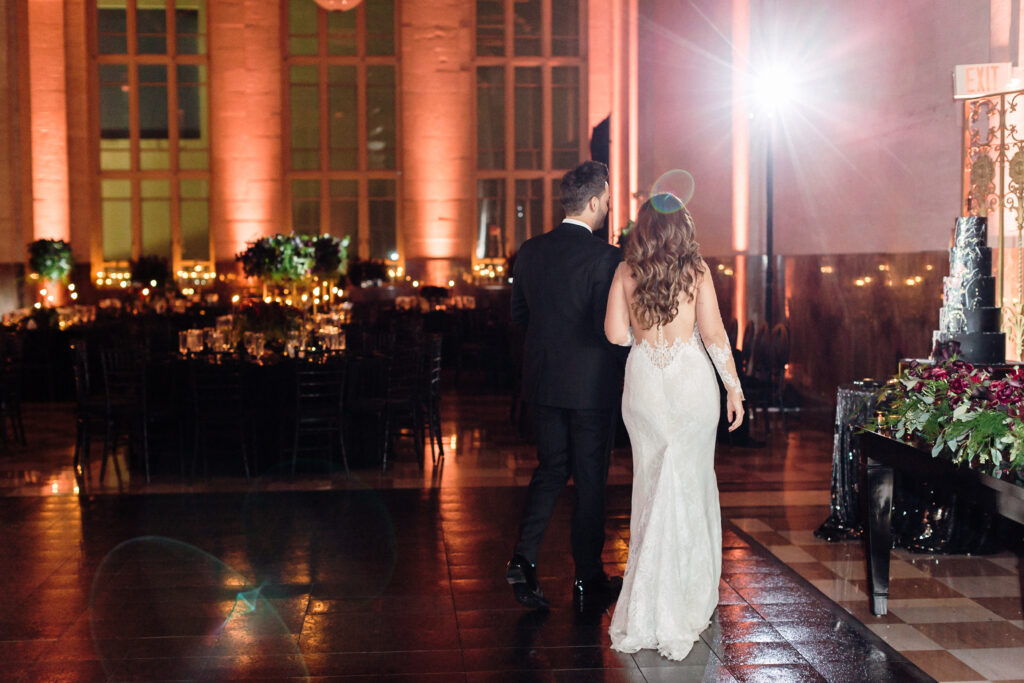
The reception entrance creates another opportunity for movement.
The bride and groom are walking into a transformed room, guests are reacting and the dress is moving naturally.
Ask the photography team to capture the entrance from multiple angles if possible.
One photographer might photograph the couple coming toward the room while another captures them from behind.
That second angle can reveal both the gown and the full reception design at the same time.
10. Capture the Dress During the First Dance
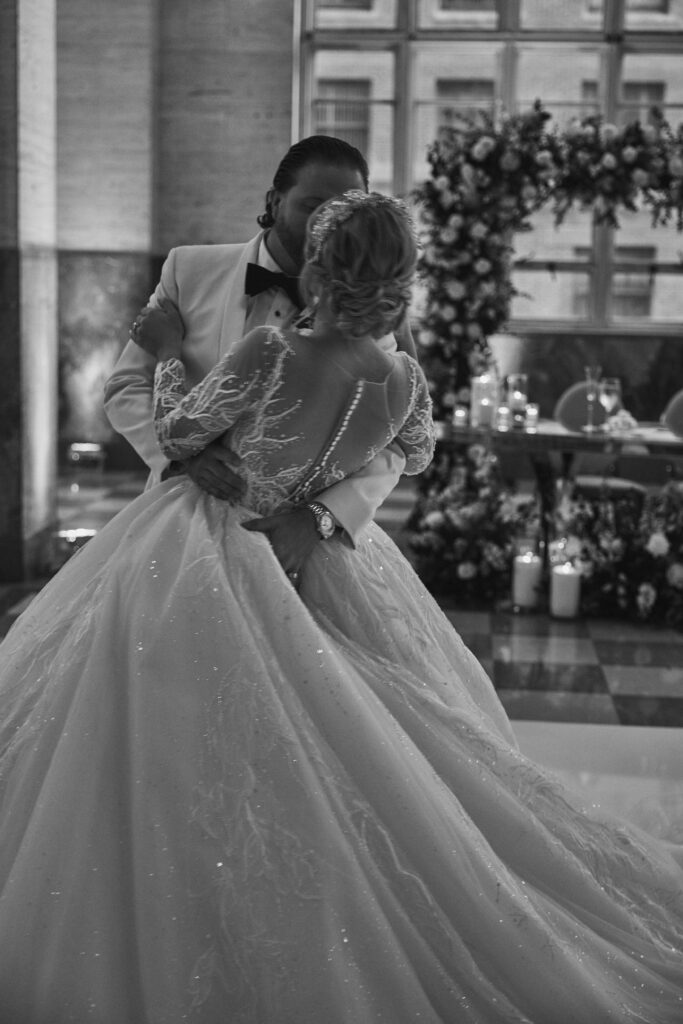
The first dance is one of the best opportunities to photograph a gown in motion.
Turns, movement and dips reveal details that can be difficult to capture during traditional portraits.
The reception environment also gives the dress an entirely different look.
Earlier in the day, bridal portraits may be photographed in natural light.
During the reception, candlelight, ballroom lighting and event production create a completely new atmosphere.
The same wedding dress can photograph almost like two different looks.
Why Historic Venues Work So Well for Bridal Fashion Photography
Statement bridal fashion does not necessarily require an elaborate backdrop.
Sometimes contrast creates the strongest photograph.
A clean silk gown against historic stone.
Modern bridal styling beneath an original painted ceiling.
Intricate lace against marble.
A dramatic open back surrounded by architecture that has existed for generations.
Historic wedding venues provide something that cannot easily be added later: built-in visual character.
The Historic Alfred I. duPont Building offers couples several different environments within one venue, giving photographers the ability to create a more varied wedding gallery without having to travel to multiple locations throughout the day.
The architecture becomes part of the story rather than simply the background.
Talk to Your Photographer About the Dress Before the Wedding
If there is one part of your dress that you especially love, tell your photographer.
Do not assume they know.
If the open back was the detail that made you choose the dress, mention it during your photography planning meeting.
Share photographs of:
- Your gown
- Veil
- Shoes
- Jewelry
- Hair inspiration
- Any second looks or accessories
Also discuss which areas of the venue you love most.
That gives the photography team an opportunity to think about the fashion and the location together before the wedding timeline begins.
The result is a gallery that feels more intentional.
The Best Backless Wedding Dress Photos Still Feel Like You
Trends are helpful for inspiration. But the strongest wedding photographs are not created simply because something happens to be popular.
They happen when the fashion, venue and couple all feel connected. If you love a backless gown because it feels effortless and modern, your photographs should reflect that.
If your dress feels dramatic, the portraits can lean editorial If your style is romantic, movement, soft light and architectural details might tell the story better.
Ultimately, the goal is not simply to photograph the dress.
It is to photograph you wearing it on one of the most meaningful days of your life.
Planning a Wedding in Miami?
The Historic Alfred I. duPont Building offers couples a setting where original Miami architecture and modern wedding style can exist side by side.
From dramatic bridal portraits and first looks to ceremony photographs and candlelit receptions, the venue provides a variety of backdrops throughout the wedding day.
Explore the wedding gallery, take a virtual tour or contact The Historic Alfred I. duPont Building to schedule an in-person visit and begin imagining your own wedding photographs inside one of Downtown Miami’s most distinctive historic venues.